Were you given a renal diet food list that consisted of “what to eat” and “what to avoid” for kidney disease? Did it leave you feeling more confused about what you should actually eat for your kidney health?
You’re not alone! The list you got from your doctor or the internet is probably wrong! Why is broccoli on some “kidney friendly food” lists and also on some “foods to avoid if you have kidney disease” lists? Don’t worry, I am going to explain to you why that is!
If you prefer to watch and listen instead of read, you can watch my YouTube episode below.
Renal diet food lists are usually based on potassium & phosphorus content
If the food is high in potassium or phosphorus it will be on the “do not eat list” and if it is low in potassium and phosphorus, it will be on the “kidney friendly list”.
The problem with this is that it doesn’t take the quality, bioavailability, or absorption of the food into account. We know that phosphorus from whole plant foods are absorbed much less than animal foods and phosphorus additives. There is even emerging research that potassium from plant sources may be less bioavailable than animal sources because of their fiber content.
These food lists that are based on potassium and phosphorus also don’t take the benefits of the food as a whole into account. Like how much fiber or antioxidants it provides. Or the potential renal acid load of the food. Or whether or not the food produces more uremic toxins or not.
These other qualities of a food are extremely important to consider when making “kidney friendly” food choices, because they play a role in how quickly kidney disease progresses.
They compare milligrams of potassium for unrealistic food portions
Most renal diet food lists rank foods as high or low in potassium based on the milligrams of potassium for 100 grams of that food. This is useful for some foods, but not for all. It is much more useful to know how much potassium is in the food for a standard portion that someone actually consumes.
Let’s compare some examples:
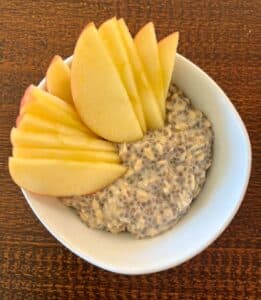
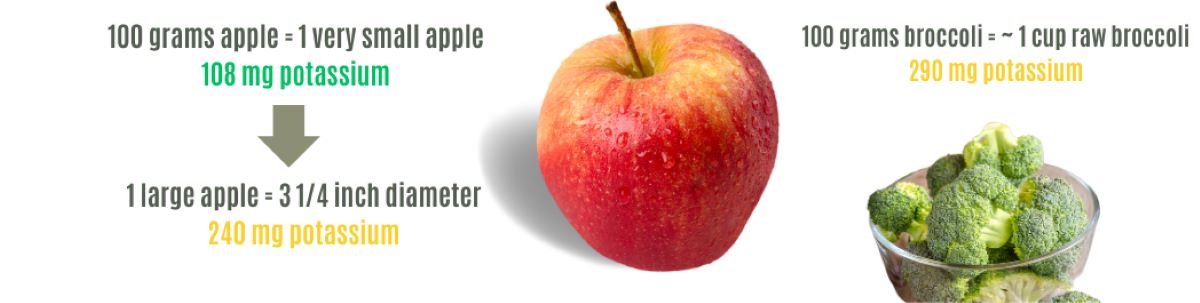
100 grams of apple is 108 mg of potassium. This is low potassium and the reason why apples are always listed on the, “eat this” food list. It’s important to realize that this is the size of a very small apple. You would likely never buy an apple this small in the grocery store.
It is much more realistic that someone would buy a medium to large apple in the grocery store. The potassium content of a medium-large apple is 190-240 mg potassium. This amount is totally acceptable to consume. But let’s compare it to the often demonized broccoli…
100 grams of raw broccoli is 290 mg potassium (roughly 1 cup raw, chopped). There isn’t a big potassium difference in someone eating 1 large apple (240 mg potassium) and 1 cup of raw broccoli (290 mg potassium).
Now let’s look at walnuts. 100 grams of walnuts is 441 mg of potassium. This seems high because it is a very large portion of walnuts (~ 1 cup). This is almost 700 calories. Most people are advised to consume one ounce of nuts as a portion which is ~ ¼ cup and only 125 mg of potassium.

We will see the same thing with peanut butter which is usually on the, “avoid if you have CKD” list. 100 grams of peanut butter is 558 mg of potassium. Again, this seems very high in potassium. However, this is 3 times the standard serving of peanut butter! A serving of peanut butter is 2 Tablespoons which is 180 mg potassium. This is a totally acceptable amount on a low potassium diet.
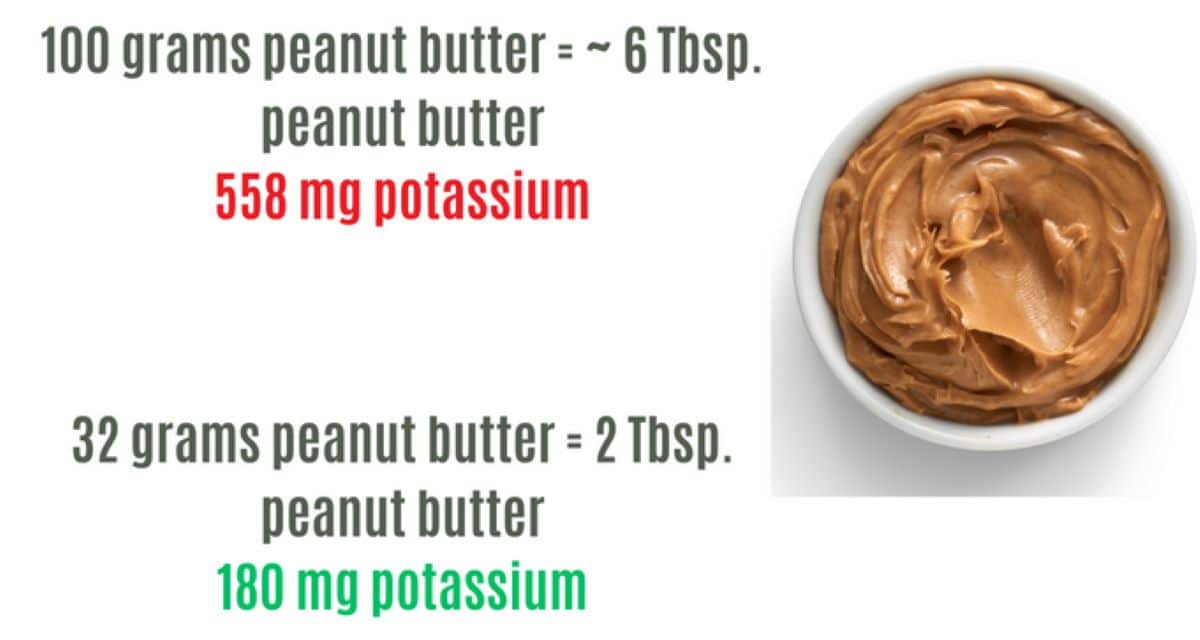
As you can see, renal diet food lists that don’t compare foods based on standard portion sizes aren’t the most accurate or helpful!
Your list doesn’t take other things into account that can accelerate kidney disease progression
Improving inflammation, gut health, blood pressure, and blood sugar ALL have to be part of your “kidney friendly diet”. In fact, we really should be using the term kidney protective and not kidney friendly.
A lot of ultra processed foods and animal protein may meet “kidney diet standards” because they are low in potassium and phosphorus. However, they may promote more inflammation, contribute to gut dysbiosis or make blood sugar and blood pressure worse!
Cornflakes are commonly on kidney friendly food lists while oatmeal is on the list of foods to limit/avoid…
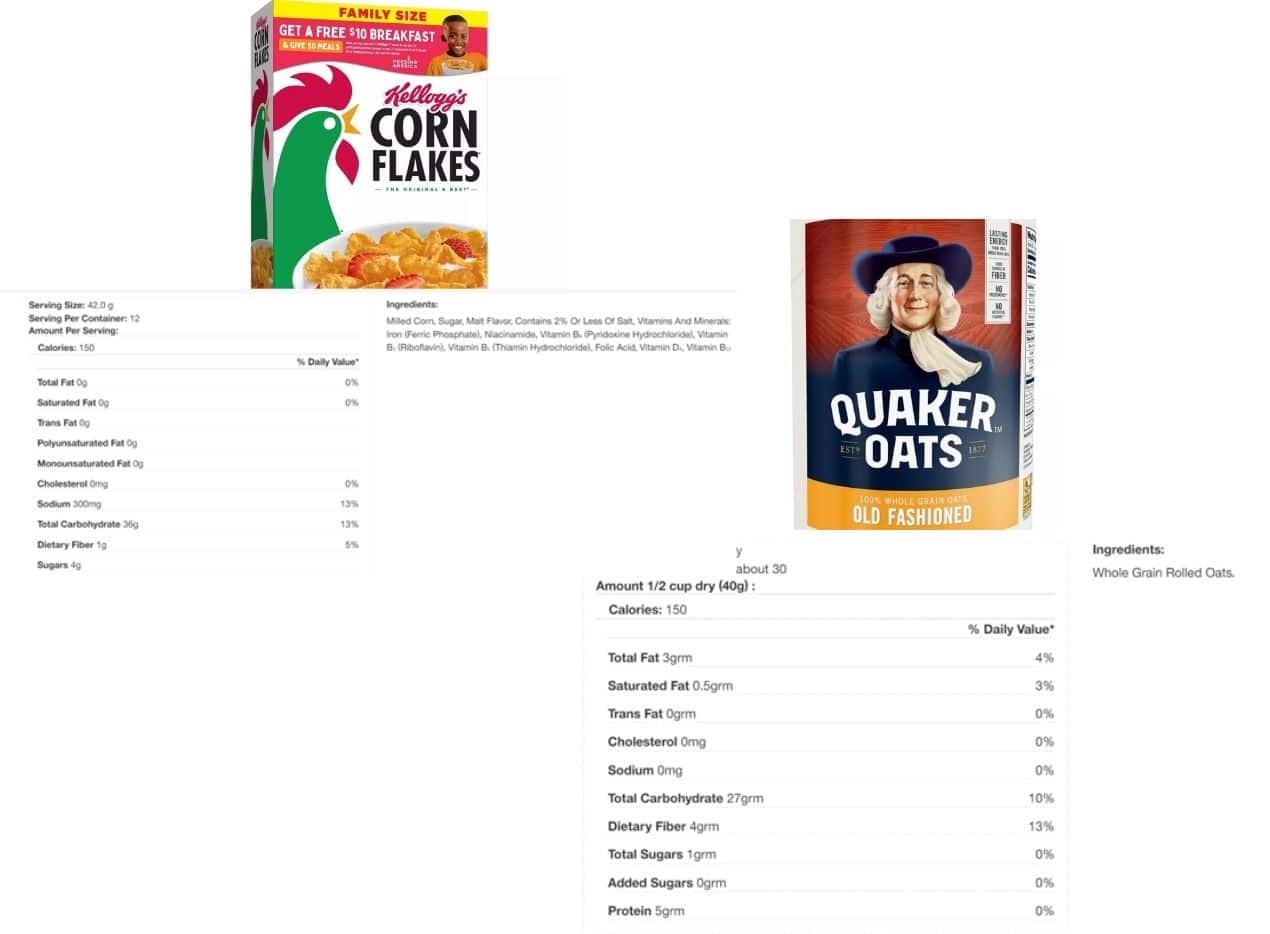
Look at the difference in fiber, the carb to fiber ratio, and sodium! The cornflakes have 1 gram of fiber for 36 grams carbohydrate (36 to 1 ratio). While the oats have 4 grams of fiber for 27 grams of carbohydrate (6.75 to 1 ratio). The cornflakes also have 300 mg sodium per serving!
It doesn’t matter that the cornflakes are lower in potassium and phosphorus! They are going to contribute to blood sugar spikes and they lack fiber, vitamins, and minerals that are all important for people with CKD.
Out with the old, “renal diet food list”
In with a new way to think about what to eat for kidney disease! Ultimately, you need to know what your nutrient needs are. And know how much of those kidney specific nutrients (like potassium, protein, fiber, etc) are in different foods.
I teach people how to learn this protective way of eating for kidney health in my comprehensive Plant Based Nutrition Guide. Start eating to preserve kidney function!